


DESCRIPTION
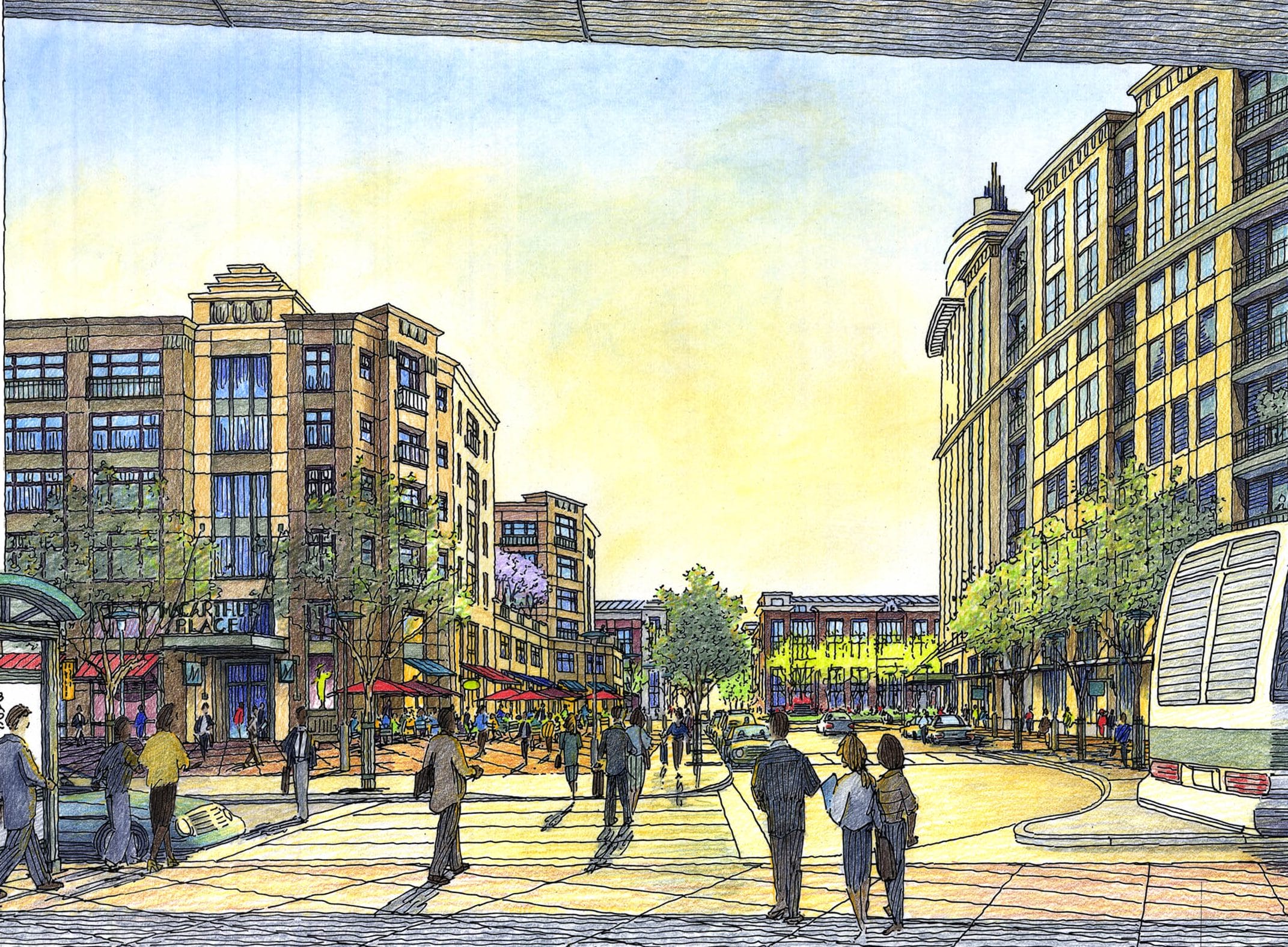
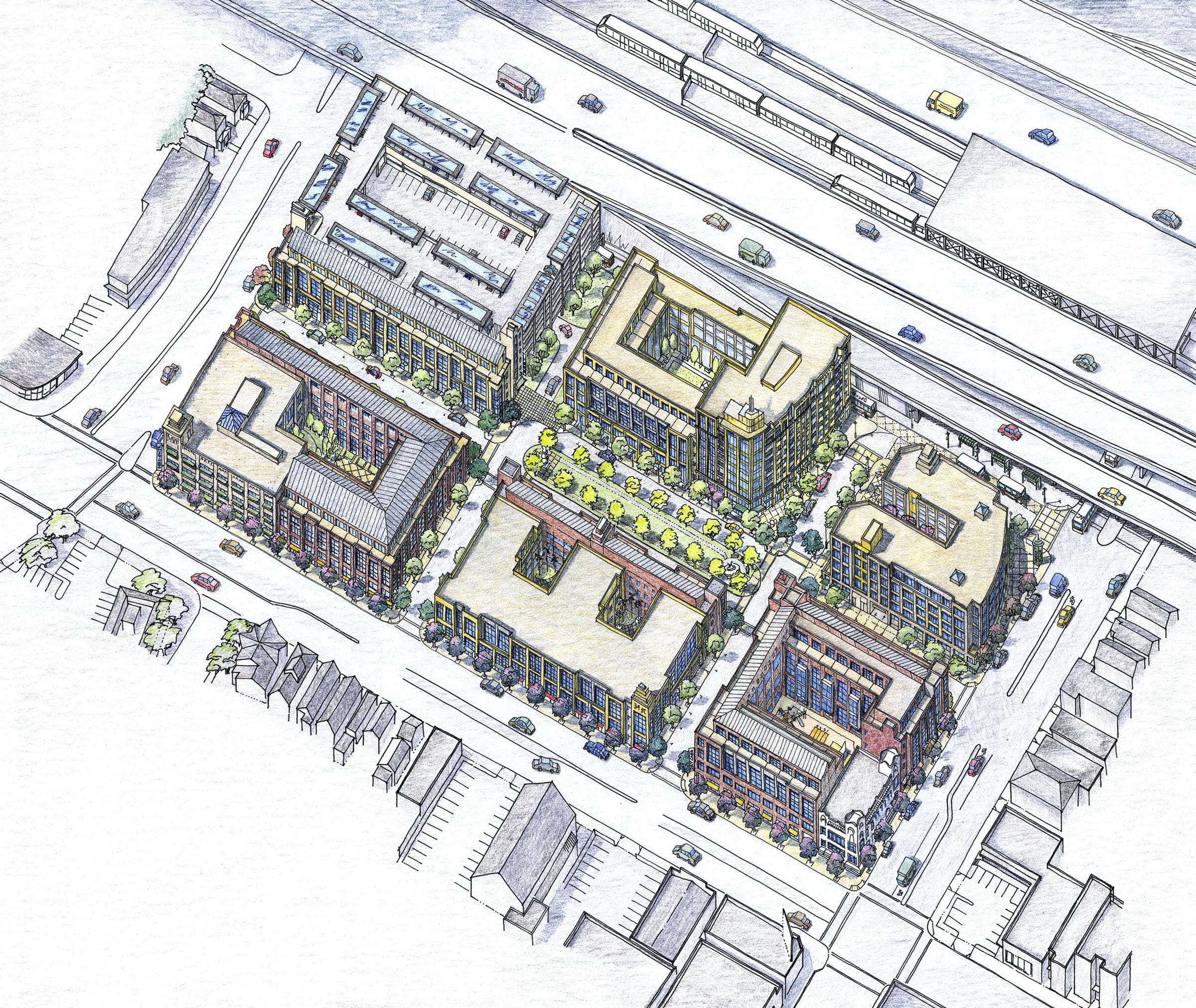
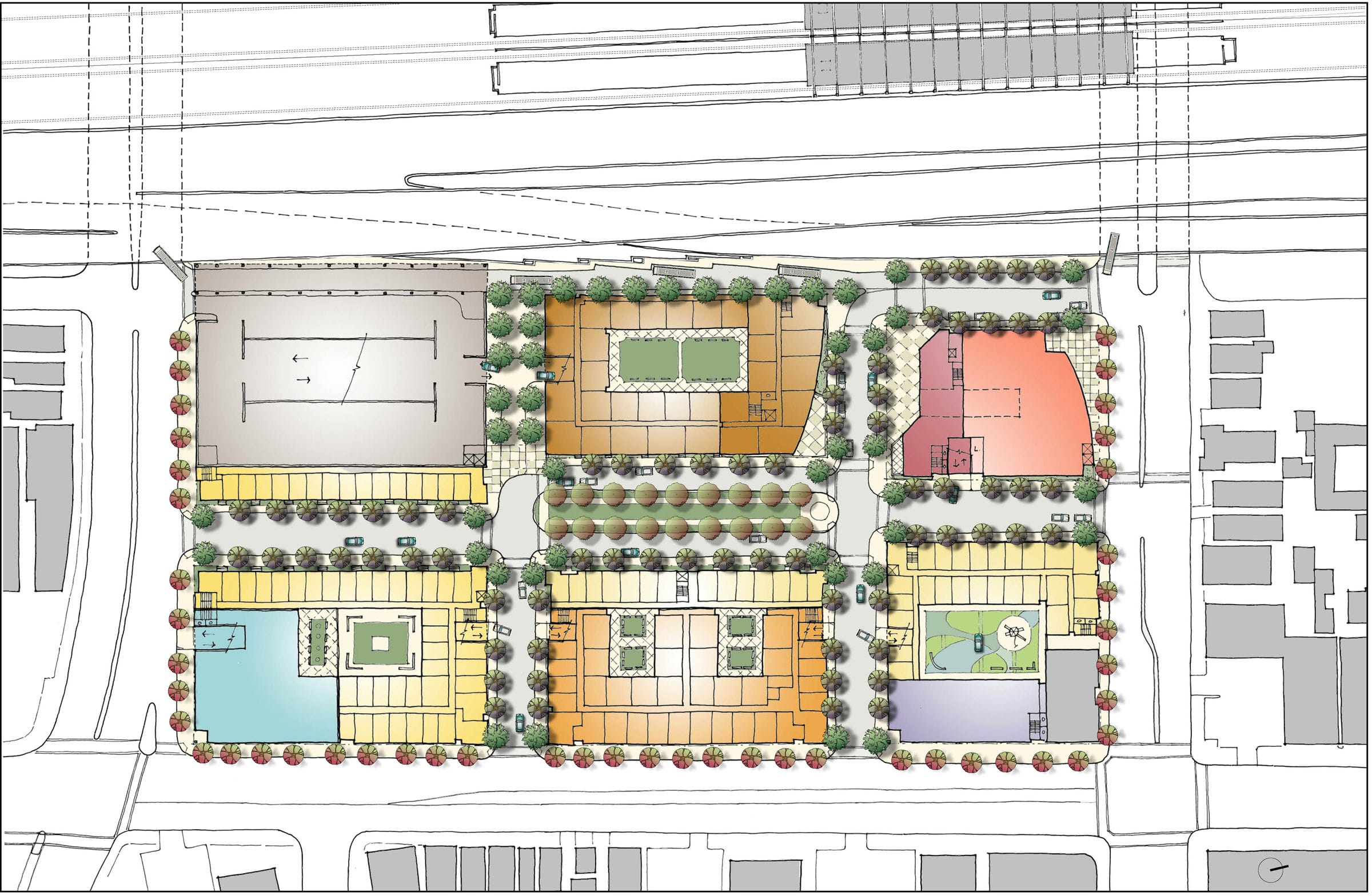
The MacArthur Transit Village site is approximately seven acres and is presently used as a surface parking lot containing approximately 600 parking spaces. The goal of the development is to create a transit-oriented, housing-focused, mixed-use development, which functions both as a focal point and an integrated link with the rest of the community. The six-block pattern and massing was developed to create a walkable neighborhood pattern by maximizing the number of blocks and ensuring the highest number of residences and retail shops facing and activating streets. Building heights in the Transit Village are about four to five stories to create a project that responds to the commercial and residential context of the area while maximizing development potential.
Design Features
- Developing an urban infill site adjacent to a transit station which is currently surface parking
- Incorporated New Urbanist design principles of walkability, mixed use development and attractive public spaces
- Successfully teamed with another architectural firm to create a coordinated vision for the area
- Development responds to market demand for housing and retail in the North Oakland area
- USGBC Rated: Gold LEED ND: Built Projectv1 – LEED 1.0 pilot
Project Information
- Client: BRIDGE Housing for City of Oakland Redevelopment Agency & The San Francisco Bay Area Rapid Transit District
- Program: 7 acres
Housing Solutions at BART Stations
Building housing at BART stations has evolved from an urban design preference into a fiscal imperative for regional stability. By replacing underutilized surface parking with high-density transit-oriented development, VMWP is helping BART create a built-in ridership base and convert land liabilities into steady lease revenue. VMWP has planned eight urban design master plans around BART stations and has four architectural projects within those plans, such as the MacArthur BART Transit Village Master Plan which includes Mural, an affordable housing project, within its scope. This strategic focus on inward growth maximizes existing multi-billion dollar infrastructure investments while fostering self-sustaining urban ecosystems that ensure the long-term financial solvency of the Bay Area transit backbone.