Posted on: May 20, 2026
Karen Murray, Partner at Van Meter Williams Pollack (VMWP), recently presented “Sustainability in Affordable Housing” to the Sausalito Sustainability Commission. The presentation highlighted proven solutions and project examples that align with the city’s environmental goals, focusing on climate mitigation, adaptation, and zero-waste strategies.
Core Strategies for Climate Resilience
Murray detailed critical pathways for reducing fossil fuel emissions and adapting to sea-level rise through high-performance building design. Key strategies featured in the presentation included::
- Energy Efficiency & Electrification: Implementing all-electric systems, heat pumps, induction cooktops, and EV charging infrastructure.
- Passive Design: Optimizing building orientation, efficient use of space, and shading to reduce solar gain, as demonstrated in the Bayfront Terrace (Mill Valley) and Victory Village (Fairfax) projects.
- Resilience Hubs: Creating safe havens for the community during emergencies, exemplified by Laurel at Perennial Park in Santa Rosa, which was developed following the Tubbs Fire.
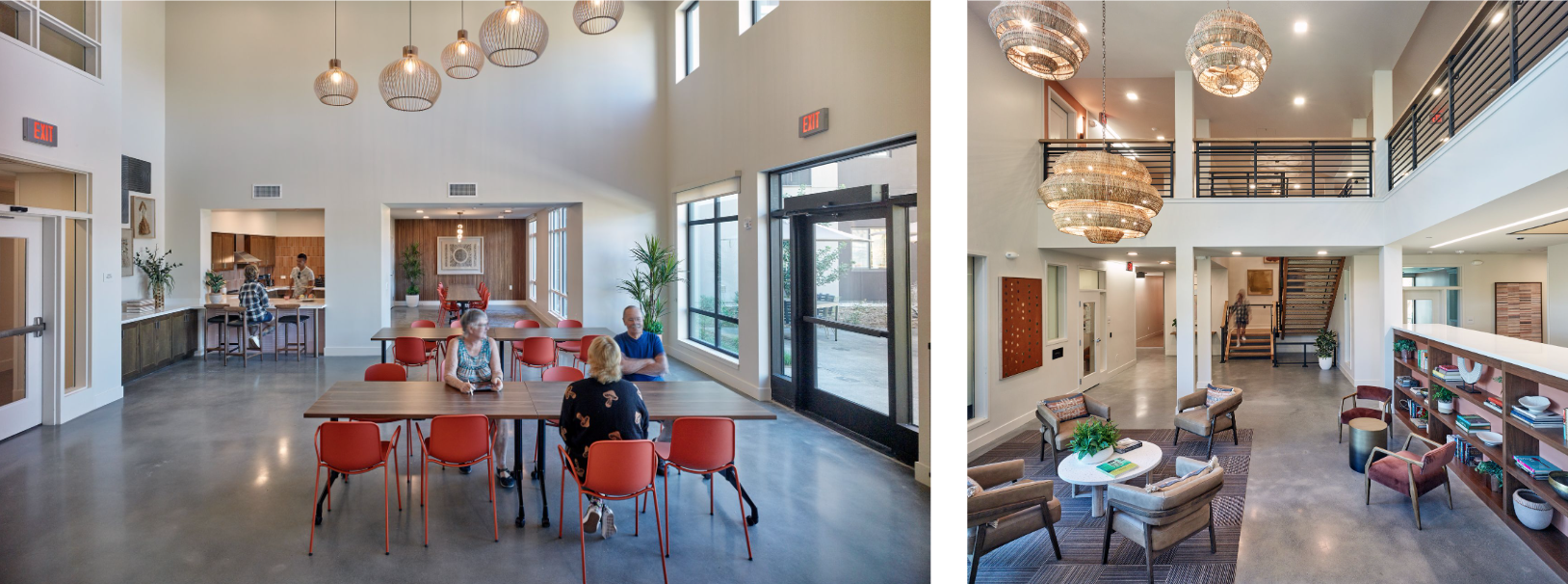
Laurel at Perennial Park resilience hub for seniors
Adaptive Reuse and Carbon Tracking
A major focus of the presentation was the environmental benefit of adaptive reuse, centered on the principle that “the greenest building is the one that is already built.” Murray illustrated this through the Casa Canal project in San Rafael, which transformed a three-story suburban office building into 41 residences while strategically raising the ground floor three feet to address future flood risks. This strategy is part of a broader effort by VMWP to track embodied carbon and minimize Global Warming Potential (GWP). By quantifying the carbon savings achieved by preserving existing concrete frames and facades (as seen in a Denver office conversion below) and applying these metrics to current developments, the firm provides a data-driven path toward meeting long-term climate targets.
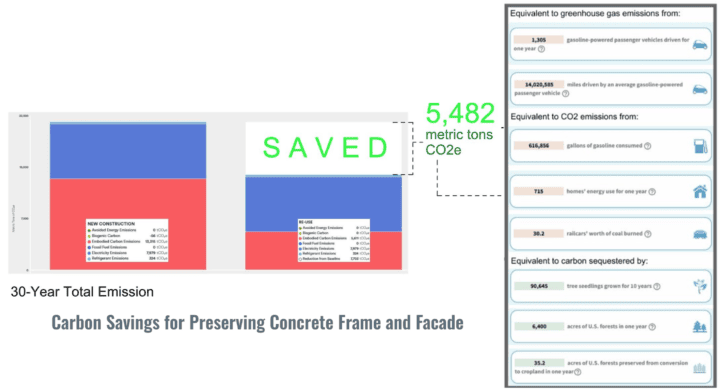
Denver office conversion data derived from C Scale
Innovative Stormwater Management
The presentation featured several models for sustainable site design:
- Victory Village (Fairfax): Utilizes large bioswales and steps with the topography to manage runoff effectively as well as a laundry-to-landscape greywater system which irrigates drought-tolerant natives in summer months.
- Warner Creek (Novato) & 1101 Connecticut (San Francisco): Both LEED Platinum projects that use steep grades to accommodate large rainwater cisterns for irrigation.
- Dry Creek (Healdsburg): This project focuses on restoring 0.57 acres of seasonal wetlands to 0.85 acres, enhancing the local riparian environment.
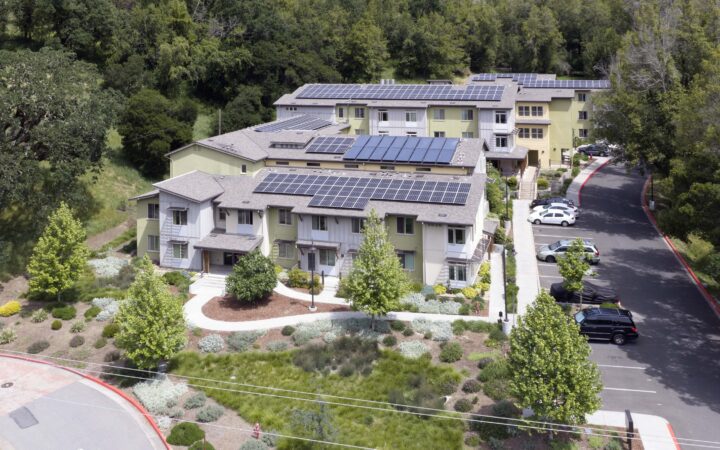
Victory Village bioswales run along building and connect with large bioretention basin.
The Link Between Density and Sustainability
Murray emphasized that land-use policy is inseparable from climate goals, advocating for density and transit-oriented development to reduce carbon footprints.
“Infill affordable housing is inherently sustainable. By utilizing existing infrastructure and reducing the need for long commutes, these projects serve as a cornerstone for sustainable urban growth.” – Karen Murray, Partner, Architect/Urban Designer at VMWP
The Human Impact: Stability and Safety
Beyond technical performance, these sustainable strategies deliver a human impact by prioritizing resident health, financial security, and psychological well-being. The integration of Resilience Hubs, for example, transforms these buildings into vital safety nets during climate events or power outages. By providing a central gathering place with reliable backup power for emergency lighting, air conditioning, and refrigeration of life-saving medicines, these hubs offer a necessary lifeline for seniors and medically vulnerable populations.
Furthermore, the presence of these systems provides psychological relief to those who are most at risk; knowing that their home is designed to remain safe and functional during a crisis significantly reduces the anxiety associated with climate instability. Furthermore, energy-efficient design directly addresses the “energy burden” often faced by low-income households. By lowering monthly utility bills through high-performance building envelopes, renewable energy, and all-electric systems, these projects provide essential financial relief to residents who are already cost-burdened, ensuring that sustainable housing serves as a foundation for long-term social equity and housing security.
A Roadmap for Sausalito
The strategies presented offer a roadmap for the City of Sausalito to enhance local resilience. By integrating sustainable practices into energy, transportation, and infrastructure, the city can better meet its Climate Action Plan targets through informed policy recommendations and public education.
SAP Feature:
As signatories of the AIA 2030 Challenge, VMWP has committed to make all new buildings and renovations carbon-neutral by the year 2030 to mitigate the catastrophic effects of climate change caused by the building sector. As part of our Sustainability Action Plan (SAP), we vow to share our knowledge of sustainability practices with our design community.